Freud & Fashion
  • Home
  • About Me
    • Education
  • Contact
  • Media/Press
  • Disclaimer
  • Speaking Engagements
  • Home
  • About Me
    • Education
  • Contact
  • Media/Press
  • Disclaimer
  • Speaking Engagements

Freud & Fashion

...BECAUSE IT'S STYLISH TO TALK ABOUT MENTAL HEALTH, ESPECIALLY HOW WE MAINTAIN OUR OWN.

Author

freudandfashion

freudandfashion

I'm a newly graduated psychiatrist who believes it's stylish to talk about mental health. Welcome to my diary, Freud & Fashion, created in 2010 to document my life as a psychiatrist-in-training and share knowledge and psychotherapy pearls that I learned along the way.

PersonalTravel

Living Free and Spontaneous

written by freudandfashion
Living Free and Spontaneous

{Malibu, California}

This may be my quickest blogpost to date, which is uncharacteristic of me because I’m such a perfectionist when it comes to writing.  But I wanted to give a personal update since I haven’t posted about my life in recent weeks on here.  Looking back at my posts from 2015, I recognize how much I’ve grown and changed my lifestyle and career to prioritize myself and what’s important for me, my family, friends, and patients.  I recall writing this post last year on my desire to explore new places and live freely after all my restrictive years in medical training, and must say that I’ve lived up to my words in 2016!

The pic above was taken recently during the Malibu Wine Safari tour as part of my birthday celebration last month (thanks to my brother for the birthday gift!) and today I’m taking off for a last minute, spontaneous international trip to a country I’m super excited to visit, but honestly wasn’t prepared for since this California girl isn’t used to the rapidly changing and varied climate of this country (hint: the name of the country sounds very cold and is an island).  Hence, the quick blogpost today since I need to go finish packing before my flight leaves in a few hours!

If you’d like to follow along on my adventures, be sure to follow me on my Snapchat (@freudandfashion)!!  PS: in addition to my daily adventures, I also post educational material on mental health and show my humorous side via parodies about shrinks.

Photo by Alex Manipod

June 10, 2016 11 comments
0 Facebook Twitter Google + Pinterest
Featured Guest Blogger

How Mental Illness Became a Light Instead of Darkness

written by freudandfashion
How Mental Illness Became a Light Instead of Darkness

Although yesterday marked the end of this year’s Mental Health Month, the discussion and efforts to raise awareness in order to break the stigma must remain a daily conversation.  So, I’m keeping the momentum going by featuring Brandon Ha, an amazing friend who also happens to be a kick ass mental health advocate and the creative director behind Break Yo Stigma, a social media campaign focused on breaking the shameful stigma of mental illness.  I first came across Brandon’s @breakyostigma Instagram page over a year ago when I was brainstorming ways to positively use social media for sharing my views on psychiatry.  The posts on @breakyostigma were bold, articulate, and uncensored when it came to the fallacies of our mental health system, and served as my inspiration to be more vocal about my own views via social media.  Therefore, I’m proud and excited to feature Brandon as a guest blogger as he discusses how his bipolar diagnosis ignited a drive to change the public’s views towards mental illness.

_________________________

We all knew that one person in high school who you thought was going to be successful.  You know, become a doctor or lawyer (or these days, some tech founder) and have it all.  A house on the hill, the love and support of family and friends, and wealth to be able to do anything he/she wanted.

Goals to that person were no obstacle and dreams were just a mere foreshadowing of the inevitable. And we all knew that person who had this unlimited potential to achieve whatever they wanted in life, but failed.  I knew the latter person from high school pretty closely — it was me.

Mental illness robbed me of the person I could’ve become.  My symptoms began as a third year in college as I had aspirations to become a pediatrician, though there were plenty of signs it started much sooner.  My focus began slipping and I started to fail my classes.  And though I had plenty of friends in college, including my high school sweetheart, I couldn’t turn to them for support. Passing by the counseling center every single day on the way home, I couldn’t open the door and walk in. Got a problem?  Hell no, not me.

But there definitely was a problem, and failing out of college was just the beginning.

That summer, like most college dropouts, I needed to do some major soul searching.  I decided to take a trip to Vietnam and visit the country and my family whom I’d never met.  Nothing like taking a trip to the motherland and discovering your roots to get you back on track, right?  I’d find myself and head toward the path to success again in no time.  But as my extended stay in Southeast Asia went on, my moods began shifting dramatically.

Sleeping less and less, sometimes no more than two hours a night; partly due to the suffocating humidity and partly due to my mind constantly racing.  Getting enough sleep was an afterthought though because I felt, ironically, even more energy the less sleep I got.  I wanted to do everything, and at the time, I thought I could.  Start a nonprofit organization, found a tech startup, go to medical school – it was all in the realm of possibility in my world.  I didn’t find the fountain of youth in Vietnam.  Instead, I found the fountain of energy.  My family, who’d just met me for the very first time, thought I was crazy.  They weren’t wrong.

After seven weeks and with my grandiosity at its absolute peak, I returned back to the states a different person.  I had lost 18 pounds from not sleeping enough for weeks on end.  The dark circles around my eyes made me look like an extra from 28 Days Later (Walking Dead wasn’t around for another decade), and my flight of ideas continued non-stop.  I was hospitalized in a psychiatric hospital shortly after my return.  Diagnosis: bipolar disorder, type 1.

I was officially crazy.

It has been 14 years since my diagnosis.  I could write forever about what I’ve gone through and seen during my years of hospitalizations and suicide attempts; the countless times I turned to drugs and alcohol to numb the pain I foolishly thought no one would understand.  I wish I could tell you I was that successful person everyone thought would have made it.  But alas, there’s no house on the hill or fancy graduate degree hanging in my office.

Today, however, I define my own success.  I started working with NAMI (National Alliance on Mental Illness) in 2010 as I started my road to recovery.  As I became more comfortable in my own skin and with my diagnosis, I began speaking to high school and college students about my story and advocating mental health and how to look for signs and take care of oneself.  In 2012, I started Break Yo Stigma, a youth mental health campaign aimed towards fighting stigma and discrimination.  And, as of February, I celebrated six years of sobriety.  I may not have that diploma hanging on the wall (yet), but that sobriety chip feels pretty damn good, too.

As someone living with bipolar disorder, I know I’ll have more extreme mood swings than the average person.  But even though my diagnosis is forever and there’s no cure, treatment is very possible.  I live a damn good life.  I know now that I’m not crazy — I never was.  And neither are the millions of people around the world that live with mental illness.  We’re not crazy, just misunderstood.  It’s time to change that.

Break yo stigma.

Bio: Brandon Ha is the Creative Director at Break Yo Stigma, a social media campaign focused on breaking the shameful stigma of mental illness. Inspired to create change in the mental health community from his own personal experience living with bipolar disorder, he seeks to end the shame preventing many people all over the world from seeking proper mental health care. Brandon currently collaborates with Bay Area mental health organizations including NAMI Santa Clara County and Stanford Psychiatry and Behavioral Sciences.

For more info, check out Break Yo Stigma on Instagram, Facebook, and Twitter.

June 2, 2016 5 comments
0 Facebook Twitter Google + Pinterest
Featured Guest Blogger

Boys Don’t Cry

written by freudandfashion
Boys Don’t Cry

As we approach the final days of Mental Health Month, one of the best ways to highlight this month’s theme – Life with a Mental Illness – is to feature inspiring individuals who are motivated to share their stories in hopes of breaking stigma and helping others.  The first few emails I received from Richard Brea stood out to me due to his desire to write about a topic that is extremely important, but unfortunately not discussed often enough, as you’ll read below.  Richard’s writing has been featured in several mental health websites, and his honesty and openness is what makes his writing so refreshing to read.

___________________________

Boys Don’t Cry

Boys don’t cry. At least that’s what society tells you nowadays.  You’re not a real man if you cry and you’re not a real man if you wear pink.  You’re not masculine if you show emotion.  As a depressed teenager I kept everything bottled inside.  I had no friends or anyone I could talk to. I felt alone. My battle with depression started when I was 15 years old.  After a breakup with my first girlfriend (at the age of 17) I reached my breaking point.  I tried committing suicide by overdosing on pain relief medicine mixed with alcohol.  Nothing happened.  I got a bit drunk and fell asleep.  I didn’t tell my family what happened until two weeks later.  Doctors told me the best thing I did was speak up and seek professional help.  I wanted to die so their words meant nothing to me.  I was upset that I failed at committing suicide.

During my first hospitalization at The Lowell Youth Treatment Center, I met a lot of kids like myself.  Some were depressed, some tried committing suicide, some had abusive parents that were also drug addicts, and some of them were there until they were placed in a foster home.  I enjoyed being around kids like myself.  It was effortless for me to be open and honest with them.  I appreciated everyone I met.  I wish I could say the same for the doctors and counselors I encountered during my three week hospitalization.

While talking to one of the older counselors there he told me, “You don’t want to cut yourself. Only girls cut themselves.”  I felt bad, but I nodded my head and said, “Yeah, you’re right.”  That was the first time someone tried to make me feel ashamed that I hurt myself.  The second time was when my writing was featured on a Borderline Personality Disorder website. Before my piece was published the owner asked me, “How do you feel being a man that hurts himself?”  I was disgusted by her question.  She wanted to include my response in the final piece but I told her ‘no.’  I said, “I don’t think about being a man when I hurt myself.  I don’t want to include that in the piece.  At the end of the day we are all the same.  It doesn’t matter what my gender is.”

During the first and only meeting with one of the therapists at The Lowell Youth Treatment Center this doctor said, “You need to be a man about it.”  He was talking about me being a man to get over my depression.  He made it seem like manhood is based on how you handle depression.  I know, it’s pretty ridiculous.  When he said that statement I became infuriated.  I felt no connection with him from the beginning and after that statement I got up and walked away.  I told him, “I’m done.  I’m not talking to you anymore.”  Joe, one of the counselors I got along with very well, noticed I stormed into my room and he asked me what happened.  I told him, “I’m not talking to that f*ggot. I’m not talking to him anymore.”  Joe asked me, “Why? What happened?”  I replied, “I just don’t want to talk to him anymore.”  A few minutes later the doctor came to my room and tried talking to me.  “What’s wrong Richard? I’m sorry if I said something to upset you. Do you want to talk?”  I ignored him.  I told him I didn’t want to talk to him.  That was the last time I ever saw him.

From that point on, I refused to talk to male therapists.  That may be an extreme way of thinking but I wasn’t going to deal with that type of nonsense again.  I’ve always believed women are more understanding and compassionate than men are.  When I had to move back to my hometown of Lynn, Massachusetts to get clean and sober, I ended up seeing two therapists – one female and one male.  Dr. Moreno definitely changed my views on having a man as my therapist.  I told him this numerous times.  He smiled and thanked me.  He told me, “Of course.  Not all guys will be like that therapist in the hospital.”

I mentioned the therapist’s comments about “being a man” and Dr. Moreno was astonished when I told him this.  “Really!? He said that?”  I laughed and said, “Yeah. He did.” “He shouldn’t be a doctor if he’s making comments like that. I don’t believe it.”  I agreed with him.

That hospitalization also served as the catalyst that shifted my views on homosexuality.  Up to that point, I was like every teenage boy in America.  I would use homophobic slurs to insult people (like that therapist) and make gay jokes when I was with my boys.  During my hospitalization I met a kid named Luis.  When I first met Luis I was with my roommate, AJ.  AJ asked Luis why he was there. His answer truly broke my heart.  “I’m here because I tried killing myself because I’m gay.”  I felt his pain when he said those words.  It’s sad that he tried killing himself because of his sexuality.  I don’t blame him for his suicide attempt because I can only imagine what he had to go through on a daily basis to get to that breaking point.  I blame the people around him for making him feel like he’s less of a man because of his sexual orientation.  After meeting Luis, I never used another homophobic slur.  I never made another gay joke again.  I am proud to say that those two statements are still true.

A few of the people I work with have a mental illness.  You can look at them and realize that. You can look at me and think I’m “normal.”  I was talking to my co-worker, Travis, on Friday and he said, “I may be wrong but from my point of view it seems like the people in the front of the office don’t mess with us in the back.  But not you, you’re different.”  It wasn’t the first time we talked but it was the first conversation we had.  I told him, “You know what, you’re absolutely right.  For whatever reason, a lot of them think they’re better than you guys.  It’s unfortunate, but it’s the truth.”

I was reserved during our talk but as soon as he said that, I opened up regarding my struggles with mental illness.  I showed him the visible scars on my wrists and shoulders from when I used to cut myself.  I told him, “I have a mental illness.  I struggle with depression and anxiety.  I’ve tried killing myself before.  At the end of the day, we are all the same.  I like being around you guys.  You guys appreciate life.  Not to say I don’t, but you guys are positive.  I want to be like you guys.”  It’s a damn shame some of my co-workers think they’re above the telemarketers at my job, but that’s who they are.  All I can do is make sure when people see me, they see love and equality.  I want people to enjoy my company and find comfort knowing they don’t have to worry about being judged because of their past or how they look, dress, and/or live.  We all seek and want the same thing. We all want love and to have our voices heard.

I don’t know why men don’t speak up regarding their mental illness, but I do understand why they are hesitant to do so.  Society makes you feel like less of a man if you seek help.  Society tries to shame you for speaking up and getting help.  I can’t imagine what other men have to deal with if I’ve had doctors and a site owner trying to shame me for how I dealt with depression.  I’ve heard statements that have made me feel bad, but I’ve never let them change who I am as a person.  It’s hard being open, vulnerable, and honest but I know it’s worth it when I get comments on my BPD piece that is three years old.  It’s worth it when I talk to Travis, my co-worker, and he tells me that he gets good vibes from me.  I applied for a video project with a non-profit based in Canada. They received over 200 applications but only two men applied.  I was one of those men.  They ended up choosing females for the video project.  I was heartbroken by their decision.  Below is a screenshot of the conversation we had.

Richard B comments jpeg

I don’t know why the stigma of mental health doesn’t affect me like so many other men.  I never really worried about what other people thought.  I was so focused on getting the help I needed so I could live a healthy and happy life.  I spent the first two years I was depressed keeping everything to myself and bottling my emotions and feelings.  I ran away from my problems.  That type of behavior is destructive not productive.  After being hospitalized, I realized that talking about my feelings was going to benefit me.

Over the past few years I have seen my story help others.  That’s when I realized there was a purpose to my pain and suffering.  Now, I don’t hold back when talking about my story.  I help break down the stigma by being open and honest.  I look forward to the day where people won’t be judged by their disability, sexual orientation, or color of their skin.  Until then, I’ll keep sharing my story and living my life to the fullest no matter what.  And when I have a bad day, I will cry because contrary to what this world tells me, boys DO cry.

Richard is 29 years old and living his dream in Los Angeles, CA. He is a believer in Jesus Christ and his faith has helped him in his struggles with mental illness. He is a writer and is working to publish his autobiography, Out of the Darkness, later this year. He loves music, movies, and reading. He strives to break down the stigma surrounding mental illnesses and disorders by sharing his story. He hopes to inspire the mental health community. Follow Richard on Instagram or email him at Rbrea1986K@aol.com.

May 26, 2016 5 comments
2 Facebook Twitter Google + Pinterest
Series

Questions I Bet Your Psychiatrist Never Asked You

written by freudandfashion
Questions I Bet Your Psychiatrist Never Asked You

Why I created this series:

Every psychiatrist has their own style, but I’ve always been interested in asking patients more open-ended questions if I think it will provide me with a greater understanding of who they are as unique individuals.  Unfortunately, I believe that the art of psychiatry has dwindled down to a checklist which subsequently churns out a diagnosis and treatment plan based on the minimum criteria needed to properly meet billing requirements.  Such a practice may lead to a lack of connection in the therapeutic relationship, therefore, I sought to create a series that explores the unspoken thoughts that a person may have when meeting with a psychiatrist.  If you would like to contribute to future questions in this series, please email me at freudandfashion@gmail.com or add me on Snapchat (freudandfashion).

QUESTION OF THE WEEK:

How do you think medical doctors treat patients with mental illness differently than those without mental illness?

RESPONSES:

I didn’t really notice much of a difference in the way medical doctors treated me with a mental illness, until I had to get surgery on my wrist. My surgeon went on extensively that I was at a higher risk for abusing the pain medication post surgery. I had to go to lengths to prove to him that I would be able to minimize this risk, and wean myself off the pain medication as soon as possible. After this experience, I wondered if a patient without mental illness would have gone through as much scrutiny. 

~ Logan, pre-med student

_________________

Doctors treat patients with mental illness differently than those without a mental illness.  From experience, doctors treat people with mental illness like they are stupid, incompetent, and incapable of doing anything for themselves.  They get treated with less respect as well.

~ Allyson, student

__________________

It depends on how much the doctors actually know about mental illnesses. The majority, unfortunately somehow equate people with mental illnesses as mentally challenged individuals. Most doctors know, before they even meet you, that you have a mental illness due to the fact that the doctors generally see what kind of medications you are currently on prior to walking into the examination room.

I literally have had some very rude doctors that would be new to me and upon opening the door, they don’t say hello…my name is…or anything. They will have their nose in the charts or x-rays and then don’t look you in the eye and tell you what they recommend and then just walk out. It really pisses me off when they act so arrogantly. I generally never do return back to see a doctor who treats me like that. Then there are those that seem a bit nervous about meeting me; however, once I start talking like the college-educated woman that I am, they seem impressed and/or astonished that a person with a mental illness could have such insight.

So it angers me and depresses me that most doctors will tag a “stupid idiot” label on someone who is taking psychotrophic medications or acts as though nothing I say is true for I might be having delusions…yet, with each new doctor I encounter, I hope to go away feeling satisfied that I for one don’t meet the stereotype that our society has created for people with mental illnesses.

~ Anonymous

_____________________

My family medicine doc never follows up on anything, ever. I have to remind them of everything so if I don’t bring it up, it never gets addressed.  And when I try to bring it up, they look at me like I’m crazy.  I guess it’s a good thing that I’m smart, knowledgeable and know a lot, but I can’t imagine what it must be like for people who don’t know anything.  I just finished reading Black Men, White Coats and that book is really honest.  I see it happen all of the time.  I think patients are disregarded in all aspects and I think with African Americans, they treat us differently when it comes to mental health.  But i don’t want to pull the race card, this is my perception of what i see.

~ Sherita, pre-med student

_____________________

Personally, sometimes I think some people don’t consider mental health as important as physical health.  Maybe that’s why some doctors do not pay attention to this point.

~ Anonymous, student

_____________________

If you have any thoughts or experiences pertaining to the question, please comment below!

May 14, 2016 11 comments
0 Facebook Twitter Google + Pinterest
Featured Guest Blogger

How An Advocate With Bipolar Disorder Gained Strength From The Online Community

written by freudandfashion
How An Advocate With Bipolar Disorder Gained Strength From The Online Community

When I first became active on social media, I was pleasantly surprised to find a number of mental health advocates who were so open about sharing their stories of living with mental illness to the public.  Rudy Caseres was one of the first advocates I connected with.  What impressed me the most about Rudy was his willingness to share his ups and downs of living with bipolar disorder.  Attaining stability hasn’t been easy, and I find myself cheering him on because he is the type of person who pushes forward and embraces each triumph.  He is the type of person who will motivate you and lead by example (even if the role might have been awkward at first, I find that to be one of his most endearing qualities).  Therefore, I’m excited to have Rudy contribute to my blog as he discusses his motivation to share his story and become a speaker for the National Alliance on Mental Illness (NAMI).

_______________________________

To have a sense of belonging — I used to not know what that felt like for the longest time. I was always the last person to be picked in team sports. I never got the lead role in school plays. I’ve been rejected by more women than I can count.  Fun, fun, fun.

So, naturally, I was not too optimistic when I entered the world of mental health advocacy. To begin, I was already apprehensive about discussing my bipolar disorder in public.  I had not yet told my dysfunctional family and was dreading having to explain myself to them.  But I knew I could not hide the truth any longer.  I did not want to feel ashamed.

It just so happened that during this time I began to be consumed by mania.  I convinced myself that I was never mentally ill and that I didn’t need anyone’s help to “conquer the world.”  Even though I kept telling myself it would never happen, I eventually crashed into a terrible depression.  It felt as if the bottom had fallen out inside my brain.  I had a real illness.

As debilitating as that experience was, I did not want it to get in the way of telling my story to the world.  Well, such a task is easier said than done!  My brain had tricked me into believing I was hopeless.  Just getting words to appear on my laptop screen felt insurmountable.  I was ready to give up on life just days after believing I had complete control over the world.  This is bipolar.

I struggled at first to find peers I could be myself with.  I felt insignificant amidst all of the established and well connected advocates.  At first I tried to fit in like the new kid on the playground.  But, like I experienced during middle school, I felt left out.  Rather than giving up like I had with so many goals, I began reaching out to people online with similar stories who were also struggling and feeling lost.  I was amazed by how many wonderful people were out there speaking up about mental illness in their own little corners of the world.  We accepted each other and they encouraged me to also speak up and not settle for pessimistic fatalism.  It was as if none of us were lost as long as we had each other’s back.  So, speak up I did.  Not only do I continue sharing my story online (like this wonderful blog ran by one of my many allies in the mental health world!), but I am also a speaker for the National Alliance on Mental Illness (NAMI) where I share my story across the Greater Los Angeles area.*  And, someday across the world!

My friends and I don’t always get along and, for sure, mental illness can make one do and say very regrettable things. But we’re all one great big, very interesting family.  We have to live with our terrible, terrible illnesses, but we’re still eager to make our mark.

Despite our minor differences, we all want to live in a world that possesses the following: no one is ashamed of their mental illness, no one is discriminated based solely on their mental illness, and the word ‘mental illness’ does not have such a negative connotation.  It is possible.  I believe this.  They do, too.

I never used to consider myself an ‘advocate.’  But, now that I know what ‘advocate’ truly means, I own the title proudly.  This world is constantly revolving.  People fall off while others are getting on.  Some even get back on.  I’m still new to this.  But, I’m not the only one.  I brought my family with me and together, we’re ready.  We are the new advocates and we have found our place.

*Opinions expressed in this story are solely my own and may not necessarily reflect those held by NAMI. I’m only speaking for myself.

Bio: Rudy Caseres is a public speaker and writer sharing his story of living with bipolar disorder. He loves engaging with people far and wide, both online and off. You can follow him on Facebook and find the rest of his social media presence at RudyCaseres.com. Mr. Caseres was born in San Pedro, Los Angeles, CA and currently resides there today. 


May 7, 2016 4 comments
0 Facebook Twitter Google + Pinterest
Medicine

How I Connect With Our Future Doctors

written by freudandfashion
How I Connect With Our Future Doctors

Latino Medical Student Association National Conference 2016

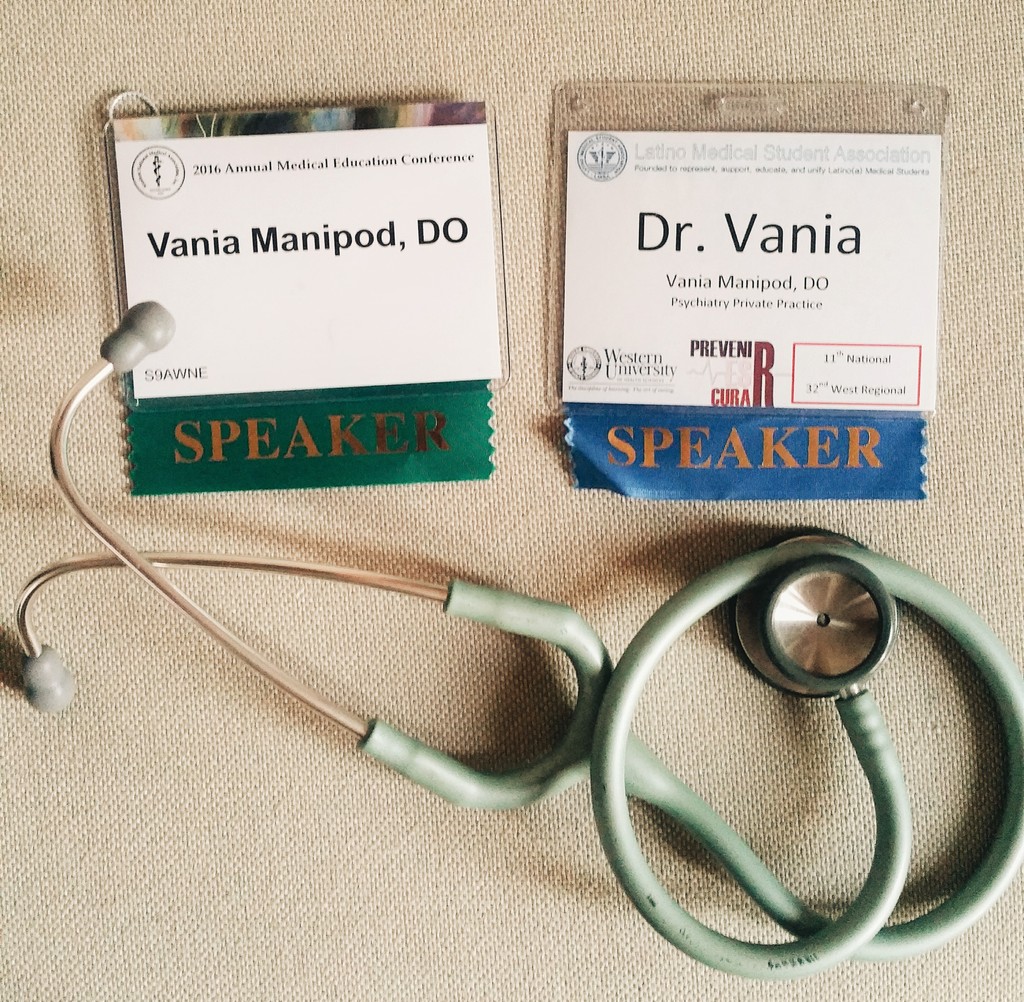
I realize it has been a few weeks since my last blogpost and the reason is because I have been even busier since receiving wonderful opportunities to speak at conferences.  Blogging and being active on social media has provided an amazing outlet to share my views on mental health, yet speaking at conferences would also be a great way to directly connect with our future doctors and health care professionals.  I’m pretty open on my blog about my previous struggles with social anxiety, so although public speaking can be challenging and highly anxiety-provoking, it has been one of my best methods for overcoming my anxiety.

The video above is a quick edit of my participation as a speaker for the Latino Medical Student Association’s National Conference, which was held at my medical school, Western University of Health Sciences College of Osteopathic Medicine of the Pacific.  I hosted a workshop on ‘medical student burnout’ and was also a panelist for the Women In Medicine panel.  Speaking at my medical school was a reminder of how I’ve come full circle as a former struggling medical student and returning as a physician sharing my knowledge and experiences!

Video by Marlon Santos

April 26, 2016 5 comments
0 Facebook Twitter Google + Pinterest
Medicine

Healthcare Lesson On a Plane Ride

written by freudandfashion
Healthcare Lesson On a Plane Ride

{Sacramento International Airport}

On my flight from Austin (where I spoke at the SNMA conference) to Sacramento last week, I sat next to a kind, wise man in his 80s who explained his history of diabetes as he pulled out his glucose meter to check his blood sugar.  “I hope you don’t mind needles, but my blood sugar tends to run high during plane rides,” he said.  I let him know that I was a physician and didn’t mind at all, then told him a story of how I helped a lady who fainted from low blood sugar a few days ago during my flight from Los Angeles to Austin.  He replied, “Oh, when my blood sugar gets low to around 50, my eyes pop out so I know to sip some orange juice to bring my blood sugar back up.”

When the flight attendant came around, I watched him request a glass of water and some peanuts as a snack.  “My blood pressure was running low today and my doc told me I should have a little salt and some water when I get this way,” he said.

Quite impressed by his self-awareness and knowledge of his medical issues, I asked how he became so pro-active in his care.  “I’ve had a great doctor for the last 20 years and he always lets me know when I’m doing something right or wrong when it comes to my health, and I listen because I know he cares.”  I looked at him and smiled with a bit of nostalgia and envy as I said, “You’re lucky to have a wonderful doctor.”

Made me wonder how much more proactive and healthier people could be if so much bureaucracy didn’t get in the way of the doctor-patient relationship.

April 2, 2016 16 comments
0 Facebook Twitter Google + Pinterest
Series

Monday Motivation: Cactus, the Guide Dog

written by freudandfashion
Monday Motivation: Cactus, the Guide Dog

{Cactus, the guide dog}

Meet Cactus, my aunt’s 3 year old black lab and guide dog for the blind.  Cactus works 5 days/week, 8 hours/day just like most humans.  Cactus also goes to the gym four times a week and takes breaks while my aunt runs on the treadmill.  Practice is important, so Cactus stays on top of her training by taking the elevator and escalator, though she’s used to taking the bus, BART, Amtrak, and taxi on a regular basis.  And just like humans, eating a healthy diet and getting regular exercise is integral for her to maintain optimal functioning.  Cactus’ personality is playful and affectionate, and she is a fast/eager learner who loves people.  Some advice for those who encounter a guide dog: remember not to disrupt the dogs while they’re working and be sure to ask the guide dog’s handler to get permission before you pet them.

March 28, 2016 2 comments
0 Facebook Twitter Google + Pinterest
MedicinePsychiatry

Why I Chose Psychiatry As My Specialty

written by freudandfashion
Why I Chose Psychiatry As My Specialty

{Rancho Cucamonga, California}

I am often asked why I chose psychiatry as my specialty, yet as one of my readers pointed out, I’ve never described my reasoning in a blogpost!  So here goes my short story of why I chose the path to become a psychiatrist…

The time to solidify your choice in medical specialty and apply for residency training programs occurs during the Fall of the 4th (and final) year of medical school.  Students have various reasons for choosing a specific specialty, some knowing which specialty they wanted to go into since childhood, others typically contemplative until right before application season.  Some people even change their minds in the midst of residency training and decide to switch specialties.

As a medical student, I attended most class lectures, yet spent majority of the time passively writing notes while chatting on instant messenger.  However, when it came to psychiatry, I woke up every morning with excitement to attend each lecture (quite unheard of since I practically dragged myself to every other lecture series), paid attention (and even turned off my instant messenger), thoroughly read the textbook, diligently took notes, and excelled at every exam.

During third year of medical school, students start clerkships, which consists of rotating through various primary care specialties (typically family medicine, internal medicine, Ob/Gyn, pediatrics, psychiatry, and surgery).  When interacting with patients during each rotation, regardless of the specialty I was assigned, I ALWAYS spent more time with my patients asking about their psychological and social backgrounds.  As a result, I eventually became identified by my senior resident and Attending physicians as the student who would generally be assigned the patients with a history of mental illness or medically-related psychiatric issue.  Also, if a patient was admitted to the hospital for physical symptoms, yet the extensive medical workup failed to determine any causative explanation for the symptoms, I was told to assess if there were any emotional issues that might be contributing to a patient’s intractable symptoms (such as cyclical vomiting syndrome, intractable pain, etc).

I specifically remember one patient — a young woman with intractable nausea/vomiting, who was unable to keep down food and fluids.  Her medical workup was normal and the medical team could not identify a cause.  While the medical team spent only a few minutes to check in on her (to do a quick medical exam and see if she had eaten), I went to visit her after rounds to chat.  My intuition told me that there was more to her issue than solely a physical complaint.  She was quite shy and spoke only a few words, yet after a few minutes of engaging in conversation, I believe she saw that I wholeheartedly cared about her wellbeing.  As it turned out, she experienced ongoing stressors at home due to a recent move with her boyfriend and often felt isolated since she was often home alone with no friends in her new area of residence.  I promised to check in on her after daily rounds and she thanked me for taking the time to speak with her.

On the third day, I saw her untouched food tray, and after a few minutes of talking, I asked if she liked ice cream.  I brought her vanilla ice cream from the supply in the nurses’ station.  We talked about how she missed her family back home.  After several minutes into the conversation, I watched her open up the ice cream cup and slowly start nibbling on small scoops.  After eating 25% of the cup’s contents, she politely asked for a cup of water.  I quickly got up to pour ice water and asked about her little brother as she took a few sips from a straw.  Before I left the room, I closely watched her for a few minutes to observe if she’d vomit the contents.  She appeared comfortable with no sign of nausea.

The following morning, I viewed the nurses’ report, which noted that she had no episodes of vomiting overnight and even ate a jello snack.  I said ‘goodbye’ to her that morning since our medical team informed her that she’d likely be discharged home after lunch.  I couldn’t help but wonder if she’d be okay returning home to the same environment that triggered her symptoms.  However, the empty plate on her breakfast tray was an indicator that she ate that morning, which reassured me.

Others docs may feel this way about their own specialty, but in my view (currently and as a medical student at the time), there is an art to psychiatry.  There are no labs to rely on and although psychopharmacology is of importance, I immediately noticed the value of a therapeutic connection and communication necessary to fully understand an individual’s situation and the context of their symptoms.  Despite such a strong emphasis on pharmacology during medical school, I recognized early on how much certain symptoms (even physical) could not be improved solely by medications and standard treatment alone.  I recalled reading The Diving Bell and the Butterfly as a medical student, which inspired me to try various different creative ways to communicate with other patients who struggled to verbalize their needs, and had a bit of success with many.

I have several other reasons that contributed to my decision to pursue psychiatry, but wanted to emphasize how much the nature of my connections with patients empowered me as a medical student.  The psychological components of a person’s history are often not prioritized when it comes to a patient’s medical care.  Throughout medical school, I often felt inferior particularly because I didn’t achieve the highest grades compared to my classmates.  However, I knew one thing for certain when the time came to apply for residency: as a psychiatrist, I could play a vital role in emphasizing the importance of an individual’s psychological and social background in order to fully address health and wellness.  And I felt confident that I’d do whatever I needed to be damn good at my profession.

Photo by Marlon Santos

March 18, 2016 24 comments
8 Facebook Twitter Google + Pinterest
Series

Questions I Bet Your Psychiatrist Never Asked You

written by freudandfashion
Questions I Bet Your Psychiatrist Never Asked You

During new patient evaluations, psychiatrists generally have a standard set of questions that are asked to help formulate a diagnosis based on diagnostic criteria and to develop a treatment plan.  Every psychiatrist has their own style, but I’ve always been interested in asking patients more open-ended questions if I think it will provide me with a greater understanding of who they are as unique individuals.  Unfortunately, I believe that the art of psychiatry has dwindled down to a checklist which subsequently churns out a diagnosis and treatment plan based on the minimum criteria needed to properly meet billing requirements.  Such a practice may lead to a lack of connection in the therapeutic relationship, therefore, I sought to create a series that explores the unspoken thoughts that a person may have when meeting with a psychiatrist.  If you would like to contribute to future questions in this series, please email me at freudandfashion@gmail.com or add me on Snapchat (freudandfashion).

QUESTION OF THE WEEK:

What do you wish you could tell your doctors when they makes changes to your meds that you don’t agree with?

RESPONSES:

I have definitely been through this experience! I WANT to say that increasing the dose scares me as the side effects I’ve experienced were horrible. I also feel that some (not all) psychiatrists barely ask you any questions about your research on medications. I feel that they don’t want to believe that you are actually capable of being educated on the topic.

Paramedic Nat (Blog: paramedicnatsmentalhealthjourney.wordpress.com, Twitter: @paramedicnat1)

Ever heard the word ‘advocate?’ Did you get your degree for the high status and income, or are you sincere about helping those of us trapped in this system? Why not take a stand against the big pharmacy industry and be true to your patient and what is best for him or her?

Anonymous

Well, to be honest, I don’t think it would be something to say but more to feel. For example, for me, as the side effects were horrible, and as I wasn’t feeling better, she kept upping my dosage.  I wish she would have FELT my side effects.  I described it as best I can, but I’m not sure all docs felt brain zaps.  I wish doctors would listen more to how we feel instead of maybe just push various pills and dosage on us.  Those are pills for our brain, it’s nothing to joke about.  I’m sure it affects us all differently.  But I wished they’d be more open to the fact that for some of us, medications (or SSRIs and such) just aren’t doing any good.

Natalie, Teacher (Twitter: @natricher)

What I absolutely love and appreciate about my psychiatrist is that he lets me choose what I’m comfortable with taking.  I don’t know if other patients are like this, but I know my diagnoses and I do research on different meds.  I haven’t found anything that’s working greatly yet since I do have a lot of different disorders, but knowing that my doctor validates what I’m comfortable with doing makes me feel that much better.  

For example, I really dislike the weight gain side effect that a lot of medications for bipolar disorder have.  I suffered major self-esteem issues in middle school because I put on 50 lbs from lithium and depakote combo.  He knows how hard I worked to get that weight off and feel better about myself, so we only talk about combinations that will make me feel comfortable taking…so that I actually take my medicine.

Alexandra, Advocate

I wish they would have taken the time to explain (simply) what the medication will be doing to my body/brain and why it’s more efficient than what I was previously taking.  

Anonymous

I honestly would tell the doctor my concerns.  I wouldn’t be rude, but I would openly say that I have concerns over it.  My hopes would be that it could open up a two-way conversation regarding my care and I could find out what they have to say (and have them see where I’m coming from).

Tom V, 1st year Medical Student

I wish I could’ve sat down with her and said clearly: “I’m sorry I called you two times today freaking out, but this medicine you gave me just isn’t working right–it’s making me worse.  I’ve never taken any meds before and I’m running scared here and I need someone to understand me and sit with me and talk about my options.  I know we didn’t meet under ideal circumstances and you don’t know me or I don’t know you, but don’t treat me like I’m one of the people who bug you all the time.  Please help me. That’s all I need is some help.”

But, I now have someone who I think is amazing and he talks to me about options and is more of a collaborative force in my health care.  He is in charge of my meds, but he has listened to me and I’m glad to say I haven’t had to take one benzo, not one single one in over 6 months so the fact that a doctor will collaborate makes me very happy, and listens.

Anonymous


Photo by Marlon Santos

March 2, 2016 20 comments
0 Facebook Twitter Google + Pinterest
Newer Posts
Older Posts

Author

Author

THE WRITINGS OF A MODERN PSYCHIATRIST

Let’s Stay In Touch!

Burnout webinars & more info coming soon!

Twitter

Tweets by FreudandFashion

Archives

Search freudandfashion.com

Let’s Stay In Touch

Burnout webinars & more info coming soon!

  • Facebook
  • Twitter
  • Instagram
  • Pinterest
  • Linkedin

freudandfashion.com All Rights Reserved. 2021


Back To Top